
Inhaled nitrous oxide mixed with oxygen is a commonly used, generally safe dental sedative when administered and monitored properly. The American Dental Association recognizes it as an effective way to manage pain and anxiety in the dental chair, and its effects clear within minutes once a patient breathes pure oxygen at the end of the appointment. Local anesthesia still handles the actual pain control. The real safety story lives in device fail-safes, careful patient screening, and how well an office controls staff exposure.
TL;DR:
- Proper patient screening and adherence to safety protocols are essential to minimize risks associated with nitrous oxide sedation, especially for those with breathing or medical issues.
- Office equipment features like fail-safe oxygen interlocks, continuous monitoring, and emergency preparedness significantly enhance patient safety during sedation.
- Most patients experience rapid onset and recovery, with minor side effects like nausea or headache that usually resolve within minutes after stopping the gas.
- Nitrous oxide effectively reduces anxiety and blunts pain perception but must be paired with local anesthesia for comprehensive pain control during procedures.
- Non-pharmacological methods and alternative sedation options are available for patients contraindicated for nitrous oxide or seeking solutions beyond gas sedation.
questions about this? we're happy to help.
Every patient's situation is a little different. If you want to talk through what this means for you, our Greenville team is one call away.
schedule a free consultationTable of Contents
- What Nitrous Oxide Dental Sedation Actually Does
- Who Benefits Most From Laughing Gas at the Dentist
- How Dental Offices Keep Nitrous Oxide Safe
- Nitrous Oxide Side Effects and What Recovery Feels Like
- What Happens Step by Step During Your Appointment
- How Offices Protect Staff From Repeated Exposure
- How Complete Dental Care Approaches Sedation and Comfort
- What the Research Actually Supports, and What Gets Overstated
- Other Ways to Manage Dental Anxiety Without Nitrous Oxide
- Ready to Talk About Sedation Options at Your Next Visit
- Sources
- FAQ
What Nitrous Oxide Dental Sedation Actually Does
Nitrous oxide dental sedation works by having the patient breathe a blend of nitrous oxide and oxygen through a small nasal mask, with the dentist adjusting the ratio in real time. That adjustment process, called titration, is the whole point. Instead of locking in one dose, the clinician starts with oxygen alone, then increases nitrous oxide in small steps, usually 5% to 10% at a time, until the patient feels calm and comfortable.
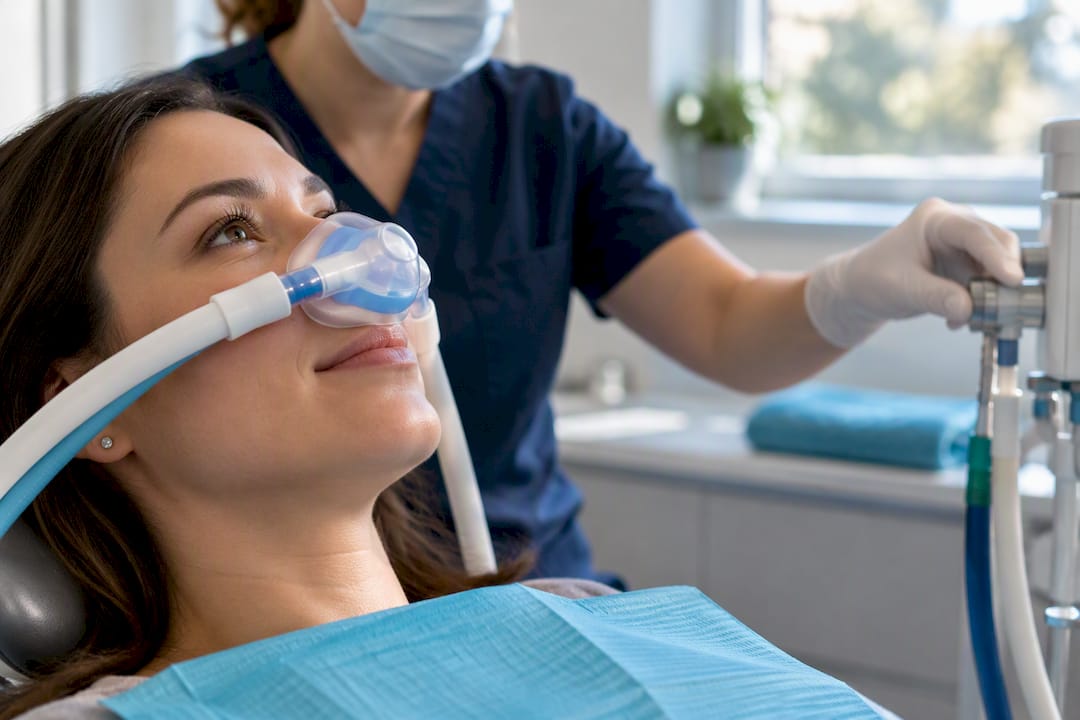
This is what separates minimal sedation from deeper sedation. Nitrous oxide keeps patients conscious, able to answer questions, breathe on their own, and respond to instructions the entire time. There’s no airway management concern the way there is with IV sedation or general anesthesia, because the patient never loses the ability to protect their own airway.
Onset is fast. Most patients feel the calming effect within two to three minutes of steady breathing through the mask. According to Cleveland Clinic, that rapid clearance is why many patients can drive themselves home afterward, unlike sedation methods that require a driver.
One thing worth clearing up: nitrous oxide dulls anxiety and blunts pain perception, but it isn’t a standalone painkiller. Dentists almost always pair it with a local anesthetic injection for anything involving drilling, extractions, or injections. Think of nitrous oxide as taking the edge off the experience, not numbing the tooth itself.
Who Benefits Most From Laughing Gas at the Dentist
Nitrous oxide tends to work best for people who need help getting through the appointment mentally, not people who need heavier physical sedation. Good candidates include patients with mild to moderate dental anxiety, a strong gag reflex, needle phobia, or a longer procedure that requires sitting still for an extended stretch.
Not everyone is a fit, and this is where the screening conversation with your dental team matters most. A peer-reviewed overview of nitrous oxide inhalation sedation outlines several contraindications worth flagging before your appointment:
- Inability to breathe through the nose (chronic congestion, a deviated septum, or a bad cold that day)
- First-trimester pregnancy, as a precaution
- Vitamin B12 or folate deficiency, since nitrous oxide can interfere with B12 metabolism
- Certain genetic conditions affecting methylation, including MTHFR mutations
- Recent middle-ear or intraocular surgery, because nitrous oxide can expand trapped gas pockets
- Severe chronic obstructive pulmonary disease (COPD)
Pediatric dentistry adds its own layer of nuance. Younger children generally need to be old enough to understand and follow basic instructions, since cooperation with nasal breathing is what makes the sedation effective. Most pediatric guidelines favor nitrous oxide only when a child can reliably keep the mask on and breathe through the nose on cue.
If you have a complex medical history, mention it plainly. Conditions involving the lungs, blood, or pregnancy status are worth discussing with both your dentist and, in some cases, your physician before the appointment. This isn’t paperwork for its own sake. It’s the step that keeps a routine, low-risk sedative genuinely low-risk for you specifically.
How Dental Offices Keep Nitrous Oxide Safe
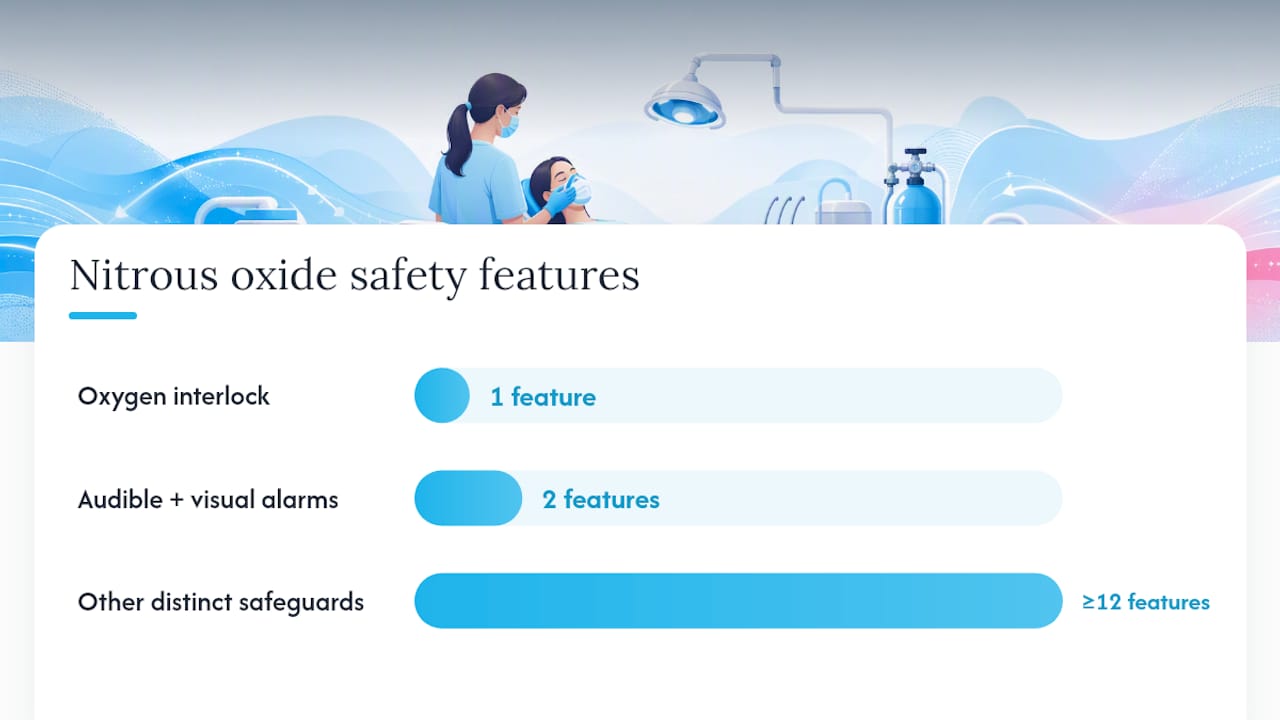
Modern nitrous oxide delivery systems are built with layered safeguards, and knowing what they are makes you a more informed patient. According to the ADA, well-designed equipment includes a fail-safe oxygen interlock that physically prevents the machine from delivering less than a set minimum oxygen percentage, along with audible and visual alarms if oxygen flow drops. The ADA also notes that at least a dozen distinct safety features exist across delivery systems, which is a lot of engineering standing between a patient and any risk of over-sedation.
Titration is the second safety layer, and it matters as much as the hardware. Rather than delivering a fixed dose, the dentist watches how the patient responds and adjusts gradually. A clinician checklist for safe administration calls for confirming the patient can breathe through the nose, fitting the mask to minimize mouth breathing, starting on oxygen alone, and increasing nitrous oxide in small increments while watching tidal volume and responsiveness. Emergency oxygen and airway equipment stay within arm’s reach the entire time, even though it’s rarely needed.
Monitoring doesn’t stop once the mask goes on. That oxygen purge isn’t optional. It’s the step that clears residual nitrous oxide and prevents the lightheaded, “hungover” feeling some patients report when the mask comes off too early.
Here’s what a well-run nitrous oxide protocol looks like in sequence:
- Confirm nasal breathing and screen for contraindications.
- Fit the mask and start with a baseline of 100% oxygen.
- Titrate nitrous oxide upward in small increments while monitoring response.
- Maintain a steady, comfortable level throughout the procedure.
- Deliver 100% oxygen for about five minutes at the end.
- Confirm recovery before discharging the patient.
Pro Tip: Don’t be shy about asking your dental team two direct questions before your appointment: “Do you use a scavenging system to clear excess gas from the room?” and “How often is your nitrous oxide equipment tested and maintained?” A confident, specific answer is a good sign the practice takes both patient and staff safety seriously.
Nitrous Oxide Side Effects and What Recovery Feels Like
Most patients tolerate nitrous oxide dental sedation with only mild, short-lived side effects, and serious complications are uncommon when the gas is administered by a trained team using proper equipment. The side effects that do show up tend to be:
- Mild nausea, particularly if the dose was increased too quickly
- Headache after the mask comes off
- Lightheadedness or a brief floating sensation
- Sweating or shivering in some patients
- Rare vivid dreaming or disorientation during deeper titration
For staff and patients who receive frequent, repeated exposure, there’s a separate consideration worth knowing: nitrous oxide can interfere with vitamin B12 metabolism over time, which is one reason occupational exposure limits exist for dental teams working with the gas daily. This isn’t a concern for someone getting nitrous oxide once or twice a year for routine dental work, but it’s relevant for hygienists and dentists who administer it regularly without adequate scavenging in place.
Recovery is typically fast enough that most patients feel back to normal within minutes of the oxygen purge, and driving yourself home is common. Cleveland Clinic notes that nitrous oxide’s rapid clearance from the body is exactly what allows this quick turnaround. If grogginess, nausea, or disorientation lingers well past the appointment, that’s worth a call to your dentist’s office rather than waiting it out.
What Happens Step by Step During Your Appointment
A nitrous oxide dental appointment follows a fairly predictable rhythm once you’re in the chair, and knowing the sequence ahead of time takes a lot of the mystery out of it.
- Screening and consent. Your dentist reviews your medical history, asks about pregnancy status, recent ear or eye surgery, and any breathing issues, then explains what to expect. There’s generally no special fasting requirement for nitrous oxide alone, though your office may give specific instructions if it’s combined with other sedation.
- Mask fitting and baseline oxygen. The nasal mask is fitted to sit comfortably, and you’ll breathe pure oxygen for a minute or two before any nitrous oxide is introduced.
- Gradual titration. The dentist increases the nitrous oxide slowly, watching how you respond. Most patients notice a warm, relaxed, slightly tingly feeling in the hands and feet within a few minutes.
- Cooperation cues. Breathing through the nose and limiting talking helps keep the dose consistent, since mouth breathing dilutes the gas mixture you’re actually receiving.
- Oxygen purge and recovery. At the end, you’ll breathe 100% oxygen for about five minutes, then the team confirms you feel clear-headed before you leave.
If any of this feels unfamiliar territory, reviewing what to expect from nitrous oxide sedation beforehand can make the actual appointment feel far less unknown.
How Offices Protect Staff From Repeated Exposure
Patients get a quick, one-time dose. Dental staff are in the room for it, day after day, which is why occupational exposure controls matter as much as patient-facing safety features. The National Institute for Occupational Safety and Health (NIOSH) recommends keeping ambient nitrous oxide concentrations at or below 25 ppm (45 mg/m3) in dental operatories, and well-maintained scavenging and ventilation systems are what get an office there.
A few practical controls separate offices that take this seriously from ones that don’t:
- Scavenging masks that actively vacuum excess gas away from the patient’s exhaled breath
- Adequate room ventilation and air exchange rates
- Daily leak checks on hoses, connectors, and the mask itself
- Confirming the vacuum pump reaches the flow rate needed for effective scavenging
- Periodic staff exposure monitoring using dosimetry badges or infrared spectrophotometry
NIOSH guidance emphasizes that scavenging and ventilation, paired with routine monitoring, are the primary levers offices have to keep chronic exposure in check for the hygienists and dentists working with the gas daily. If you’re curious how seriously a practice takes this, it’s a fair question to ask directly: how often is equipment leak tested, and is staff exposure monitored on any regular schedule?
How Complete Dental Care Approaches Sedation and Comfort
Nitrous oxide is one option within a broader comfort-focused approach to dentistry, used when it fits a patient’s clinical picture and paired with local anesthesia for anything involving actual tooth work. The practice leans on 3D imaging and digital scanning to plan procedures precisely, which tends to shorten chair time. Shorter appointments matter for anxious patients, since less time in the chair means less time depending on sedation to stay comfortable.
For patients who feel calmer with extra support beyond the gas itself, the practice also offers a therapy dog for anxious patients during visits. That combination, sedation options alongside non-pharmacological comfort measures, reflects a broader philosophy: nitrous oxide is one tool among several, not a one-size-fits-all default for every anxious patient who walks through the door.
What the Research Actually Supports, and What Gets Overstated
The conventional wisdom on nitrous oxide swings between two extremes online: either it’s dismissed as a gimmick that “doesn’t really do anything,” or it’s oversold as a cure-all for dental anxiety. Neither holds up. The honest read of the evidence is that nitrous oxide’s real value isn’t clinical superiority. It’s turnaround speed and ease of recovery compared to heavier sedation, which matters enormously for someone trying to get through a filling without dreading the whole day.
Where most patient advice falls short is treating “is it safe” as the only question worth asking. The device fail-safes and ADA guidelines matter, but the bigger variable is whether your specific health history, from B12 status to breathing ability, was actually screened before the mask went on. That conversation, not the gas itself, is where risk usually gets managed or missed.
If you’re deciding whether to ask for nitrous oxide at your next appointment, prioritize the screening conversation first, then the equipment questions, then your own comfort preferences. Skipping straight to “does it work” misses where the actual safety margin lives.
— Complete Dental Care
Other Ways to Manage Dental Anxiety Without Nitrous Oxide
Nitrous oxide isn’t the only option, and it isn’t the right fit for everyone screened out by the contraindications above. Oral conscious sedation, taken as a pill before the appointment, offers a deeper level of calm for patients with more significant anxiety, though it requires a driver home since effects last longer than nitrous oxide’s few minutes. IV sedation goes a step further for complex or lengthy procedures, administered under closer monitoring, and also requires a ride home afterward.
For patients who don’t need pharmacological sedation at all, behavioral approaches can go a long way. Simple techniques like scheduling morning appointments to reduce anticipatory anxiety, using headphones to block operatory sounds, or bringing a support person into the room address the psychological side of dental anxiety directly. Non-drug comfort measures, like a calming environment or a therapy animal present during treatment, work well for patients who want anxiety relief without any sedative at all.
The right choice depends on how significant the anxiety is, how long the procedure will take, and whether any of the nitrous oxide contraindications apply. A brief cleaning might need nothing more than headphones and a calm hygienist. A multi-hour implant procedure might call for something stronger than gas alone. None of these options compete with each other so much as cover different points on the same spectrum, from mild nervousness to genuine dental phobia.
Ready to Talk About Sedation Options at Your Next Visit
If dental anxiety, a strong gag reflex, or a longer procedure has kept you from scheduling the care you need, Complete Dental Care builds sedation options directly into its patient-first approach rather than treating comfort as an afterthought. The practice combines nitrous oxide and other anxiety support with 3D imaging and digital planning so procedures move efficiently once you’re in the chair, and pairs that with a compassionate, communication-first philosophy for patients who’ve avoided the dentist because of past discomfort.
Whether you need a routine cleaning, a restorative procedure, or you’re exploring options like Teeth in a Day for missing or failing teeth, sedation can be part of that conversation from the start. Membership plan options are also available for patients weighing costs alongside comfort. The next step is straightforward: schedule your first visit and tell the team about your anxiety or medical history upfront, so they can tailor the sedation conversation to your specific case before you’re ever in the chair.
This article is general information, not a substitute for advice from a qualified doctor. Consult a qualified healthcare professional about your own circumstances before acting on anything here.
Sources
- Nitrous Oxide | American Dental Association
- Nitrous Oxide (Laughing Gas): Uses, Side Effects & Safety — Cleveland Clinic
FAQ
Why Don’t All Dentists Offer Nitrous Oxide?
Not every practice invests in the equipment, scavenging systems, and staff training that nitrous oxide requires, and some dentists prefer to refer anxious patients to sedation specialists instead. It also isn’t necessary for most routine appointments, so some general practices simply never added it to their services.
Can You Still Feel Pain With Laughing Gas?
Yes, nitrous oxide reduces anxiety and dulls pain perception but doesn’t numb the tooth or gum tissue on its own. Dentists pair it with a local anesthetic for any procedure involving drilling, injections, or extractions.
Is Nitrous Oxide at the Dentist Worth It?
For patients with mild to moderate anxiety, a strong gag reflex, or needle phobia, it’s often worth requesting because of how quickly it takes effect and clears afterward. Cleveland Clinic notes most patients can drive themselves home shortly after the appointment, which makes it a low-hassle option compared to deeper sedation methods.
What Are the Side Effects of Nitrous Oxide at the Dentist?
The most common side effects are mild nausea, headache, and lightheadedness, all of which typically resolve within minutes of breathing pure oxygen at the end of the appointment. Serious complications are uncommon when the gas is delivered with proper screening and equipment, as outlined in the ADA’s safety guidance.
Does Complete Dental Care Offer Nitrous Oxide Sedation?
Nitrous oxide is offered as part of comfort-focused approaches for patients who qualify, typically alongside local anesthesia for the procedure itself. Details on what to expect during sedation are available, and current pricing for services is listed directly on the practice’s site.
questions about this? we're happy to help.
Every patient's situation is a little different. If you want to talk through what this means for you, our Greenville team is one call away.
schedule a free consultation