Clean your dentures, reseat them properly, and try a small amount of an FDA-recognized denture adhesive as a temporary bridge. Skip household glues entirely. But if you’re reaching for adhesive every day, dealing with recurring sores, or notice a sudden change in fit, that’s your body telling you the denture itself needs professional attention. A reline, a rebase, or an implant-supported solution fixes the actual problem instead of masking it.
TL;DR:
- Most denture looseness results from jawbone shrinkage, with bone loss being fastest in the first six months after extraction, causing fit issues over time.
- Proper denture care involves cleaning with nonabrasive cleaners, avoiding hot water, and reseating correctly before applying minimal adhesive only as a temporary solution.
- DIY repairs are limited to minor cracks or loose teeth using FDA-cleared kits, while household glues and heating attempts can cause permanent damage.
- Long-term solutions like relining, rebasing, or dental implants depend on the severity of fit deterioration and should be evaluated by a professional for durability and stability.
- Regular professional check-ups and daily maintenance, including nightly removal, support long-term denture stability and prevent the need for frequent adhesive use.
questions about this? we're happy to help.
Every patient's situation is a little different. If you want to talk through what this means for you, our Greenville team is one call away.
schedule a free consultationTable of Contents
- Why Dentures Loosen: Signs and Causes
- Quick Home Fixes That Actually Help
- Safe DIY Repairs vs. What to Never Do at Home
- Professional Solutions for a Better Fit
- Implant Options: Fixing Looseness for Good
- Preventing Loose Dentures Before They Start
- Choosing Between a Reline and an Implant: Our Perspective
- How Complete Dental Care Can Help You Stop the Slipping
- Sources
- FAQ
Why Dentures Loosen: Signs and Causes
The jawbone under your gums doesn’t stay still after teeth come out. It shrinks, a process called residual ridge resorption, and that’s the main reason dentures that fit perfectly on day one start rocking a year or two later. Bone loss moves fastest in the first six months after extraction, then keeps going at a slower pace for the rest of your life. Your denture, meanwhile, stays the same shape. The gap between the two grows.
Bone loss isn’t the only driver. Denture material wears down with years of chewing, your bite can shift, sudden weight loss changes your gum contours, and a warped base from improper storage or hot water exposure throws off the whole fit.
Watch for these signs that looseness has crossed from normal to problematic:
- Slipping or clicking when you talk, laugh, or eat
- Sore spots that keep coming back in the same place
- Needing more adhesive than you used to, or using it daily
- Food constantly working its way underneath the plate
Quick Home Fixes That Actually Help
Before anything else, reseat the denture correctly. Bite down firmly and evenly, then hold for a few seconds so it settles fully against your gums rather than tilting on one side.
Cleaning matters more than most wearers realize. Use a nonabrasive denture cleaner, never regular toothpaste, which can scratch the acrylic and create rougher surfaces that trap bacteria. Soak the denture in water or cleanser whenever it’s out of your mouth, and never use hot water. Heat warps the base permanently.
For adhesive, follow this sequence:
- Dry the denture surface completely before applying anything.
- Apply small, pea-sized dabs, not a continuous bead, at two or three points rather than the entire ridge.
- Seat and hold with firm, even pressure.
- Wipe away any excess that squeezes out at the edges.
Denture adhesive safety note: properly fitted dentures shouldn’t need adhesive at all, according to the FDA. The agency also flags a real concern with zinc-containing adhesives: some patients using large amounts developed neurological symptoms. A standard denture adhesive tube should last several weeks for most wearers. If you’re burning through a tube faster than that, you’re using too much, and it’s a signal the fit has changed.
Temporary soft reliner cushions, sold as short-term relief kits, can ease pressure on sore spots for a week or two while you arrange a dental visit. They’re a stopgap, not a cure.
Safe DIY Repairs vs. What to Never Do at Home
A cracked denture or a tooth that’s come loose is fixable at home only with an actual FDA-cleared repair kit designed for that purpose, and only for minor damage. Anything beyond a hairline crack or a single loose tooth belongs in a dental lab.
If a denture breaks or a piece chips off:
- Remove it immediately if any edge feels sharp against your gums or tongue.
- Collect every fragment in a clean, dry container. A lab often needs the original pieces to rebuild an accurate fit.
- Keep the denture moist between now and your appointment; dried acrylic can distort.
- Don’t wear it again if it’s cutting or irritating tissue.
Never reach for superglue or any household cyanoacrylate adhesive. These products aren’t formulated for oral use and can degrade the acrylic in ways that make later professional repair difficult or impossible. Don’t file down rough edges yourself, and never try to heat and reshape a warped denture. Both moves tend to make the underlying problem worse.
Pro Tip: Keep the box your denture came in, or any small container with a lid, in your bathroom cabinet specifically for storing broken pieces. Fumbling for a bag during a dental emergency wastes time you don’t have.
Professional Solutions for a Better Fit
A dentist has several tools for loosening dentures, and the right one depends on how far the fit has drifted.
- Adjustment and occlusal remount. For minor, localized rocking or a single sore spot, your dentist can grind and polish specific pressure points chairside, often in one visit.
- Soft reline. A cushioning layer gets added to the tissue side of the denture. It’s comfortable but temporary, typically lasting a matter of months, and works well for sensitive or irregular gum tissue.
- Hard reline. A more durable acrylic layer replaces the fitting surface and lasts considerably longer than a soft reline, usually requiring one or two appointments.
- Rebasing. The entire base gets replaced while your existing (still-good) teeth are kept and reset into it. This is worth considering when the base has degraded but the teeth themselves haven’t.
- Full remake. Once wear, warping, or bone change has outpaced what a reline can fix, a new denture is often the more cost-effective route than repeated adjustments.
Alveolar ridge resorption and occlusal changes are the documented clinical reasons relining and remaking exist as standard responses, not optional upgrades. Expect a follow-up visit after any reline to check the bite and confirm no new sore spots have developed.
Implant Options: Fixing Looseness for Good
Relines buy time. Implants change the equation entirely, because they anchor the denture to bone instead of relying on suction and gum contact that keeps shifting.
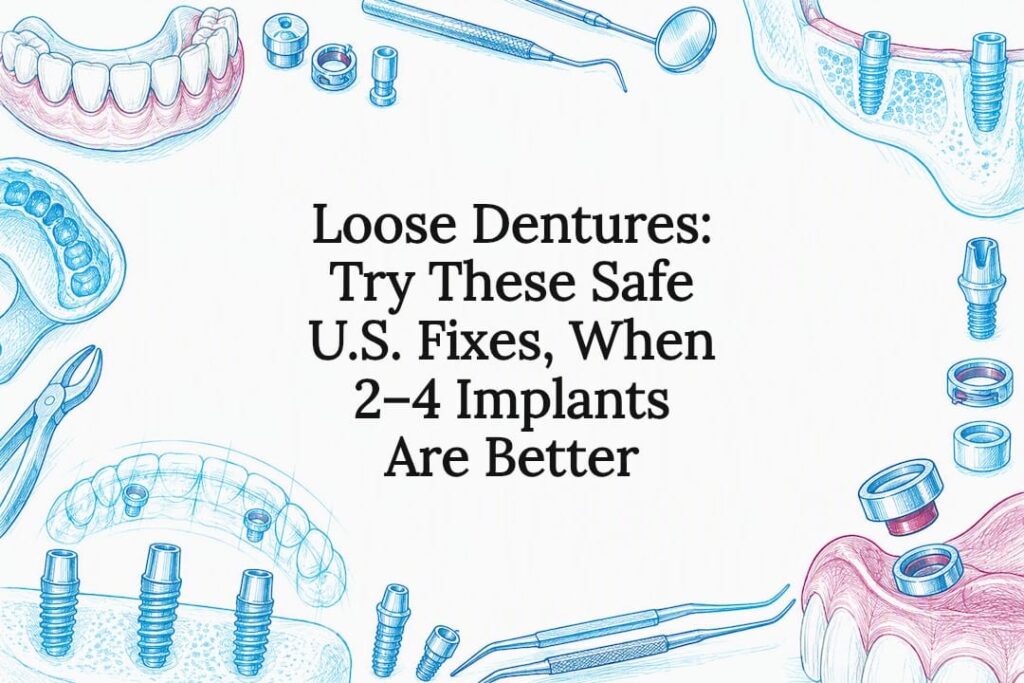
An implant-supported overdenture typically uses two to four implants per arch with attachments that snap the denture into place. Cleveland Clinic notes that this setup significantly improves chewing force, speech clarity, and comfort compared with a conventional plate, and you can learn more about how the snap-in mechanism works before deciding if it fits your situation.
For patients who want to stop removing their teeth entirely, fixed full-arch options like All-on-4 anchor a permanent bridge to as few as four implants per arch. There’s no nightly removal and no adhesive, though it does mean a surgical procedure, healing time, and ongoing professional cleanings similar to natural teeth.
Getting there requires evaluating bone volume through 3D imaging, and some patients need bone grafting first if resorption has progressed too far. Research on posterior ridge resorption suggests certain implant strategies slow further bone loss compared with conventional dentures alone. The tradeoff is real: more upfront planning and cost, against food choices and confidence many patients thought they’d lost permanently.
- A few implants per arch are typically used for a removable overdenture
- Fixed full-arch bridges eliminate the need for adhesive altogether
- Bone grafting may add months to the timeline, but improves long-term implant stability
Preventing Loose Dentures Before They Start
Most of what determines how long a denture stays comfortable happens in the daily routine, not the dentist’s chair.
Clean your dentures every day with a nonabrasive cleanser, never hot water, and take them out at night. The ADA recommends nightly removal specifically because continuous 24-hour wear keeps steady pressure on the ridge, and giving your tissue a break supports better long-term fit. Store them in water or a denture solution so the acrylic doesn’t dry out and warp.
Book a dental review on a regular schedule, not just when something feels wrong. A dentist checking your fit and bite can catch drift early, before it turns into daily adhesive use or sore spots.
- Clean daily with nonabrasive products; skip hot water entirely
- Remove dentures nightly and store them properly
- Schedule periodic fit and occlusion checks rather than waiting for problems
- Watch for medication side effects like dry mouth, and mention significant weight changes at your next visit
Choosing Between a Reline and an Implant: Our Perspective
We evaluate every loose-denture case with 3D imaging and a real conversation about the patient’s goals, not a one-size answer. Budget, timeline, and how permanent you want the result all shape whether a reline or an implant-supported solution makes more sense right now.
— Complete Dental Care
How Complete Dental Care Can Help You Stop the Slipping
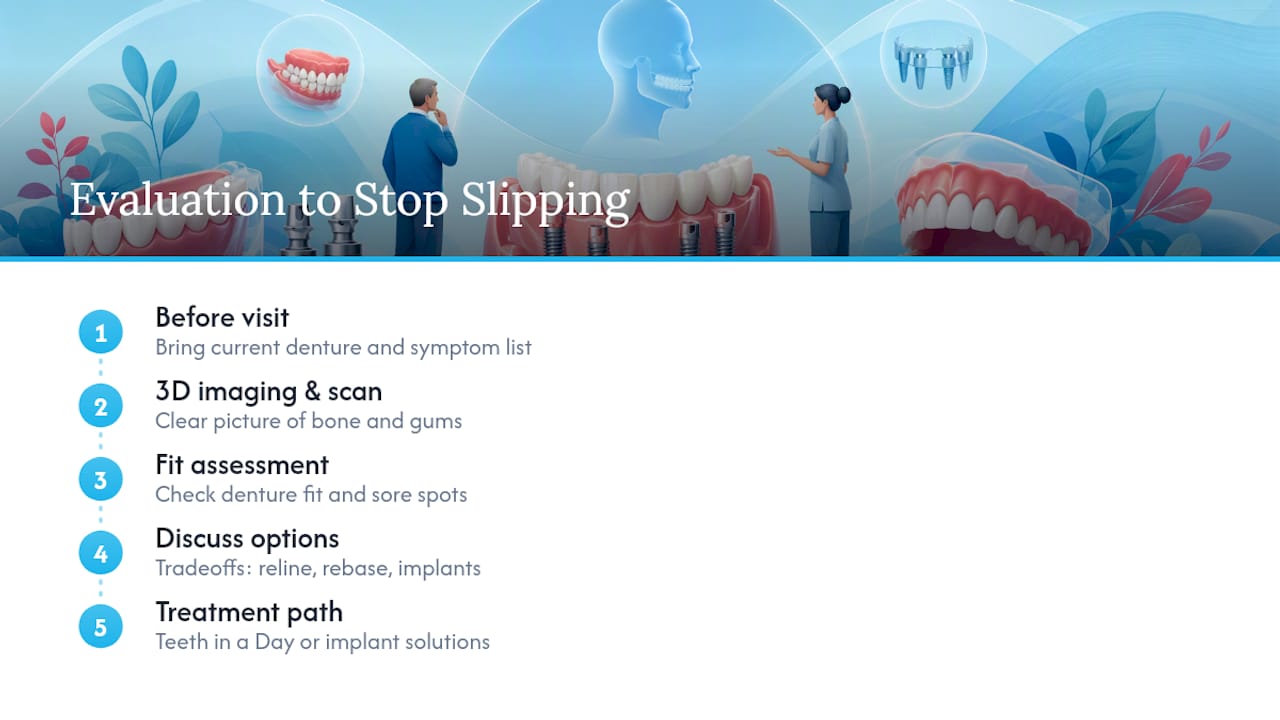
If adhesive has become a daily habit rather than an occasional backup, that’s the fix worth pursuing before another sore spot shows up. A dental practice built its process around 3D imaging and digital scanning specifically so patients get a clear picture of their bone and gum changes before committing to a reline, a rebase, or an implant path, with staff explaining the tradeoffs in plain language instead of leaving patients to guess.
For patients ready to stop the cycle of adjustments altogether, Teeth in a Day provides a same-day path to a fixed, implant-supported result, while our surgical and implant dentistry services cover everything from single-tooth implants to full-arch solutions. An evaluation typically includes a scan, a fit assessment, and a straightforward conversation about which option matches your timeline and budget. Bring your current denture and a list of your symptoms, and call to schedule your evaluation.
This article is general information, not a substitute for advice from a qualified doctor. Consult a qualified healthcare professional about your own circumstances before acting on anything here.
Sources
- Implant-supported dentures overview | Cleveland Clinic
- Denture adhesives | U.S. Food and Drug Administration (FDA)
- Denture care and maintenance | American Dental Association (ADA)
- Role of alveolar ridge resorption and occlusal changes in denture instability | IJCMPh
FAQ
How can I fix my loose dentures at home?
Clean your denture with a nonabrasive cleanser, reseat it with firm even pressure, and apply a small pea-sized amount of adhesive at two or three points rather than one continuous bead. This helps temporarily, but properly fitted dentures shouldn’t need adhesive at all, so persistent looseness still needs a dentist’s evaluation.
What can I do if my dentures are too loose?
Start with cleaning and correct seating, then try adhesive sparingly as a short-term measure. If looseness continues or you’re applying adhesive daily, a reline, rebase, or new denture from a dentist addresses the actual fit problem rather than covering it up.
Can loose dentures be fixed permanently?
Yes, in most cases. A soft or hard reline restores fit for a period of months to years depending on the type, while implant-supported overdentures or fixed full-arch implants offer the most permanent solution because they anchor to bone instead of relying on suction against shifting gums.
What is the best thing to use for loose dentures?
For minor daily slippage, an FDA-recognized adhesive applied in small amounts works as a temporary bridge. For a lasting fix, professional relining or an implant-supported denture solves the underlying cause instead of masking symptoms, and a dental practice can evaluate which option fits your bone structure and goals.
questions about this? we're happy to help.
Every patient's situation is a little different. If you want to talk through what this means for you, our Greenville team is one call away.
schedule a free consultation