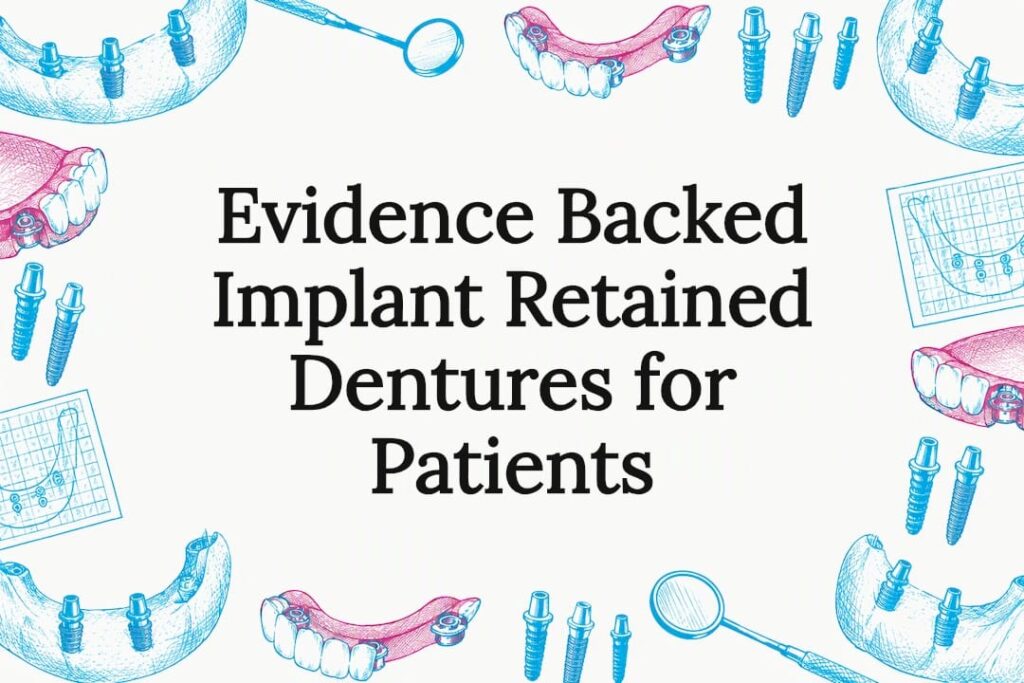
Implant retained dentures anchor a removable denture to two or more dental implants, replacing gum-suction retention with a mechanical snap that holds far more securely. The main payoffs are a denture that won’t shift when you laugh or bite into an apple, less bone loss under the gum line, and real chewing force restored. People with loose lower dentures, an edentulous jaw, or chronic sore spots from conventional dentures tend to benefit most.
TL;DR:
- Implant retained dentures offer significantly better stability and chewing ability than conventional dentures, especially for the lower jaw.
- Attachment options like ball, locator, bar, magnetic, and telescopic systems vary in retention strength, cost, and ease of cleaning.
- Candidates need sufficient bone volume, good gum health, and controlled systemic conditions, with treatment involving imaging, possible grafting, and staged implant placement.
- The prosthesis is removable for daily cleaning, with wearing components requiring replacement approximately every one to two years.
- Long-term success depends on diligent hygiene, monitoring for signs of implant failure, and regular professional maintenance.
questions about this? we're happy to help.
Every patient's situation is a little different. If you want to talk through what this means for you, our Greenville team is one call away.
schedule a free consultationTable of Contents
- What Are Implant Retained Dentures, Exactly?
- What Attachment Systems Connect the Denture to the Implants?
- Do Implant Dentures Actually Work Better Than Regular Dentures?
- Who Is a Good Candidate and What Does Treatment Involve?
- What Are the Risks and How Much Maintenance Do They Need?
- How Complete Dental Care Approaches Implant Overdentures
- Removable Overdenture or Fixed Full-Arch: How to Decide
- Ready to Find Out Which Option Fits Your Mouth?
- Sources
- FAQ
What Are Implant Retained Dentures, Exactly?
An implant retained denture, also called a snap-in denture, is a removable prosthesis that clips onto implants placed in the jawbone instead of relying on suction and adhesive against the gums. That distinction matters because the term gets confused with two related but different setups.
An “implant-supported” removable denture works the same way as an overdenture. But a fixed, screw-retained full-arch restoration is a different category entirely: the patient cannot take it out, and the dentist is the only one who removes it, typically for maintenance visits. Implant counts diverge sharply between the two. A mandibular overdenture often needs only two implants, a threshold supported by the long-standing McGill consensus as a reasonable first-choice option for many edentulous patients. Fixed full-arch solutions, sometimes marketed as Teeth in a Day, generally require four to six implants per arch to distribute bite force without a removable base.
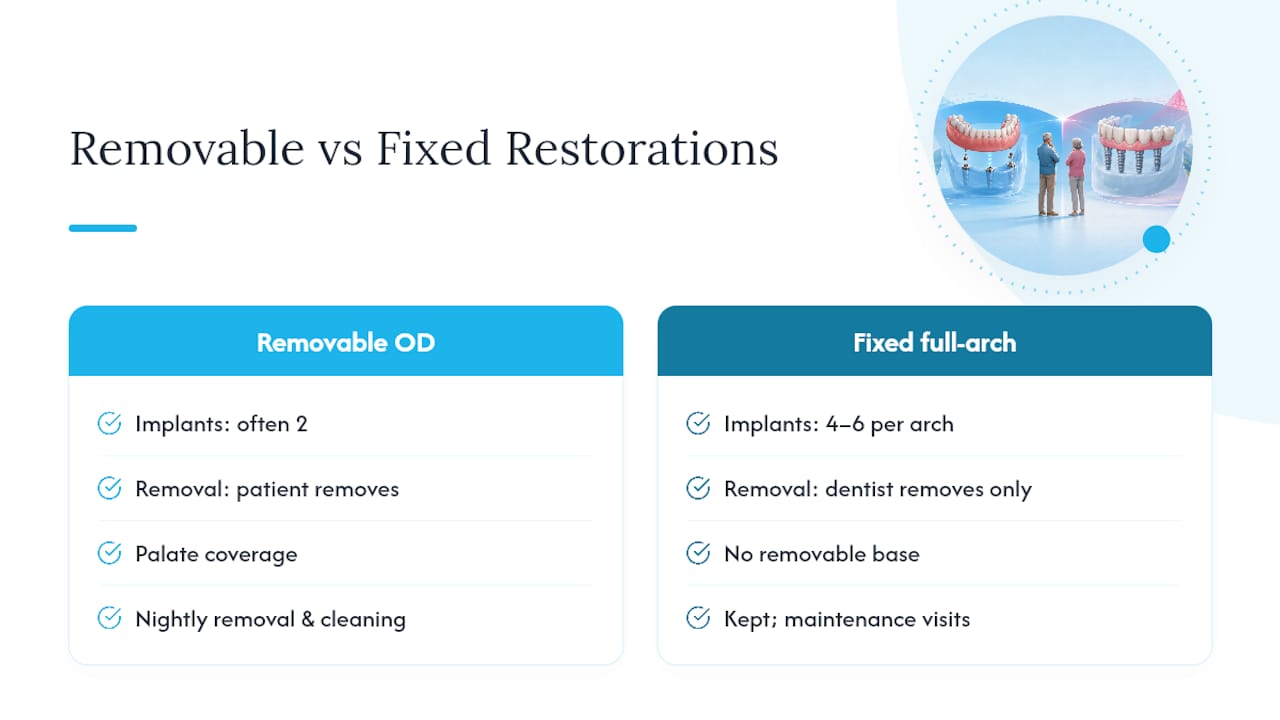
Day to day, the difference shows up in small ways. A removable overdenture still covers some palate tissue and comes out at night for cleaning. A fixed prosthesis feels closer to natural teeth, but neither option is inherently better for every mouth. Bone volume, budget, and hygiene habits usually decide which direction makes sense.
What Attachment Systems Connect the Denture to the Implants?
The attachment system is the hardware that lets the denture click onto the implants, and the choice shapes retention strength, cleaning routine, and long-term cost. Clinicians pick based on how much space exists between the ridges, how the implants are angled, and how well the patient can manage hygiene at home.
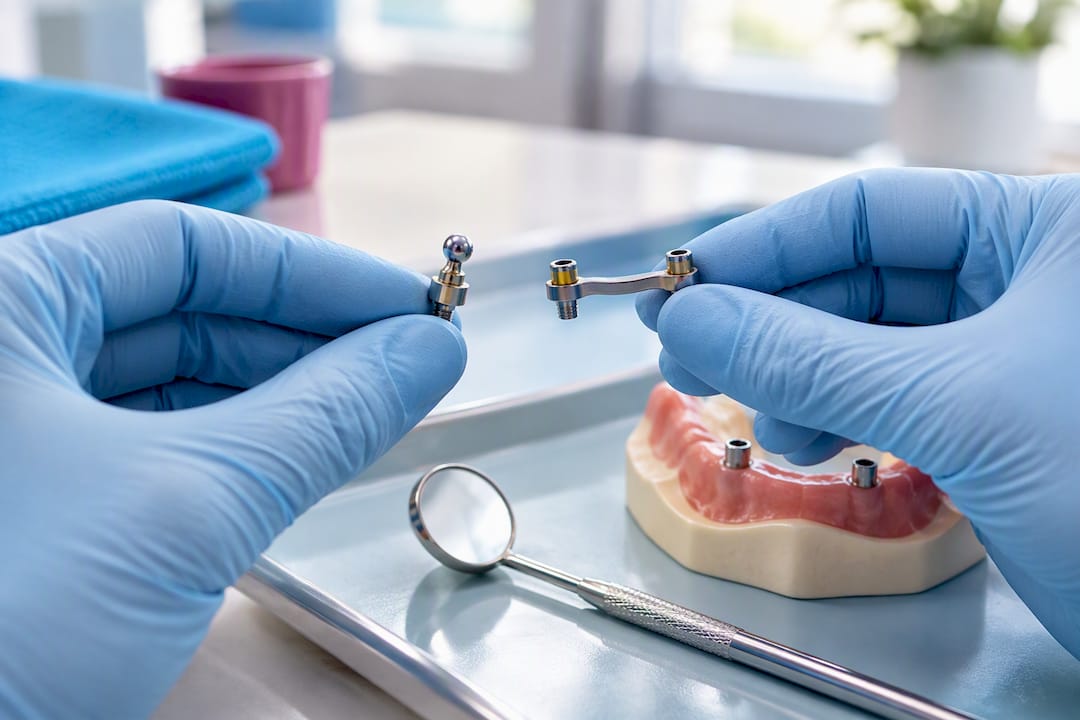
- Ball or stud attachments: individual snap connectors on each implant, tolerant of minor angulation differences, and a common choice when space is limited.
- Locator attachments: a low-profile version of the ball design, widely used because the housing is easy to replace as the plastic inserts wear down.
- Bar attachments: a metal bar splints the implants together, which gives the highest retention of the removable options but needs more inter-ridge space and adds cleaning complexity underneath the bar.
- Magnetic attachments: gentler retention, sometimes chosen for patients with limited dexterity, though they offer less holding power than mechanical clips.
- Telescopic attachments: a double-crown design that reports strong patient satisfaction and comparatively low irritation of the surrounding gum tissue in systematic review data, but they cost more to fabricate.
Bar systems generally outperform on retention but demand the most ridge space and the most careful home cleaning underneath. Locator and ball attachments handle angled implants better and cost less to maintain over time.
Pro Tip: Ask your dentist to show you a demo attachment model before treatment. Feeling how a ball attachment snaps versus how a bar locks in place makes the tradeoffs click instantly.
A fixed, screw-retained option enters the conversation when a patient has enough bone for four to six implants per arch and prefers a restoration that never comes out. Material choices there usually run toward zirconia or a titanium bar with acrylic and denture teeth, both selected for durability under constant biting force.
Do Implant Dentures Actually Work Better Than Regular Dentures?
Yes, on nearly every functional measure researchers have tracked. A meta-analysis of implant-supported and conventional dentures in older adults found consistently better oral-health-related quality of life and chewing performance for the implant-retained group, though the individual studies varied enough in design that outcomes weren’t uniform across every trial reviewed.
The practical gains match what patients report anecdotally: fewer sore spots because the denture isn’t rocking against the ridge, noticeably less slipping during meals, and enough bite force back to eat foods that conventional dentures make miserable, like corn on the cob or a crusty roll.
Across the randomized trials and meta-analysis reviewed, implant-retained overdentures showed a repeatable edge in masticatory function and patient-reported satisfaction compared with conventional complete dentures, particularly on the lower jaw.
None of this means every patient sees identical improvement. Bone density, jaw shape, and how long someone has been wearing conventional dentures all shift the ceiling on what an overdenture can restore. It’s a strong intervention with variable magnitude, not a guaranteed fix.
Who Is a Good Candidate and What Does Treatment Involve?
Candidacy hinges on bone volume, gum health, and a handful of medical factors that affect healing. Uncontrolled diabetes, heavy smoking, and untreated periodontitis all raise the risk of implant failure, according to the FDA’s guidance on dental implants, so your dentist will ask about all three before recommending surgery. A history of gum disease doesn’t automatically disqualify anyone, but it usually means a longer healing runway and closer monitoring.
The evaluation and treatment sequence generally runs in this order:
- Diagnostic imaging: a CBCT scan and digital impressions map bone density and nerve position before anything is planned.
- Treatment planning: the dentist decides implant count, placement sites, and whether grafting is needed to build up thin bone.
- Extraction and grafting (if needed): failing teeth come out, sometimes with bone grafting or a sinus lift done at the same visit.
- Implant placement: implants go into the jawbone, either with immediate loading the same day or a staged approach that waits three to six months for the bone to fuse.
- Denture fitting and attachment: once healed, the final overdenture is fitted and snapped onto the chosen attachment system.
Cost varies widely depending on implant count, grafting needs, and attachment type, so ask for an itemized cost breakdown rather than a single lump figure, and ask specifically what financing or membership options are available before committing.
What Are the Risks and How Much Maintenance Do They Need?
Surgical risks include infection, nerve injury, sinus perforation, and outright implant failure, all of which the FDA documents as known risks tied partly to smoking and uncontrolled systemic disease. Peri-implantitis, an infection of the gum and bone around an implant, is the complication that causes most late failures, and it’s largely preventable with consistent daily cleaning around implants.
Prosthetic wear is the other maintenance category, separate from surgical risk entirely:
- Nylon retention inserts in locator attachments wear down and typically need periodic replacement over time.
- Screws inside the attachment housing can loosen with repeated snapping in and out, and need periodic retightening.
- The American College of Prosthodontists advises against routinely removing full-arch restorations for maintenance unless there’s a mechanical problem or hygiene issue, which limits unnecessary wear on the components.
Recall intervals should be risk-based, generally every two to six months depending on smoking history, prior periodontitis, or dexterity limitations that make home cleaning harder.
Pro Tip: If your denture suddenly feels looser than usual or you notice a persistent bad taste near one implant, don’t wait for your next scheduled cleaning. Those are early warning signs of implant failure worth calling about right away.
How Complete Dental Care Approaches Implant Overdentures
Every implant plan is built around 3D imaging and digital scanning, so bone volume and implant angulation are mapped before any surgery. Patients considering snap-in dentures walk through a consult, imaging, and a reviewed treatment plan, with some candidates able to have same-day Teeth in a Day placement. Maintenance follow-up is scheduled based on individual risk profiles rather than a fixed interval, matching an individualized recall approach.
Removable Overdenture or Fixed Full-Arch: How to Decide
Cost and reversibility favor the removable overdenture; permanence and a more natural feel favor the fixed option, but fixed restorations demand better long-term hygiene commitment. Neither wins outright. The right move is a diagnostic consult with an itemized plan that prices both paths against your actual bone volume and budget.
— Complete Dental Care
Ready to Find Out Which Option Fits Your Mouth?
If you’re tired of a denture that clicks, slips, or rubs a sore spot into the same place every week, a diagnostic consult answers the real question fast: how much bone you have, how many implants that supports, and what it will actually cost. Plans are built around 3D imaging and digital scans first, so patients see their own anatomy before any decision is made, not a generic mockup. For patients who qualify, Teeth in a Day can mean walking out with a functioning new smile the same day as surgery. Others do better with a staged approach through surgical and implant dentistry, and either way you’ll get an itemized quote and financing options explained before you commit. Request a 3D imaging consult and get your real numbers on the table.
This article is general information, not a substitute for advice from a qualified doctor. Consult a qualified healthcare professional about your own circumstances before acting on anything here.
Sources
- Dental implants: what you should know (FDA)
- Implant-Supported and Conventional Dentures: A Meta-Analysis in Older Adults (PMC)
- Position Statement: Maintenance of Full-Arch Implant Restorations | American College of Prosthodontists
FAQ
Are Implant Retained Dentures Any Good?
Yes, for most patients they outperform conventional dentures on stability, chewing force, and comfort. Meta-analysis data on older adults shows consistently better oral-health-related quality of life scores for implant-retained overdentures, though how much someone improves depends on their bone volume and how long they’ve worn dentures before switching.
What Are the Problems With Implant Retained Dentures?
The most common issues are prosthetic wear, not implant failure: the plastic retention inserts inside attachments wear out and need replacing every one to two years, and screws inside the housing can loosen over time. Peri-implantitis, an infection around the implant caused by plaque buildup, is the complication most likely to threaten long-term success if home cleaning slips.
Do Implant Retained Dentures Come Out?
Yes, that’s the point of the design. Unlike a fixed, screw-retained full-arch restoration, a snap-in overdenture is meant to be removed daily for cleaning and while sleeping, then snapped back onto the implant attachments each morning.
How Long Do Implant Retained Dentures Last?
The implants themselves can last decades with good maintenance and no uncontrolled health issues, but the denture and its attachment components wear faster. Expect to replace retention inserts every one to two years and to have the denture itself relined or remade roughly every five to seven years, depending on how it’s worn and cleaned.
questions about this? we're happy to help.
Every patient's situation is a little different. If you want to talk through what this means for you, our Greenville team is one call away.
schedule a free consultation